From the Sherifian Empire to modern currency
The banknotes in pictures
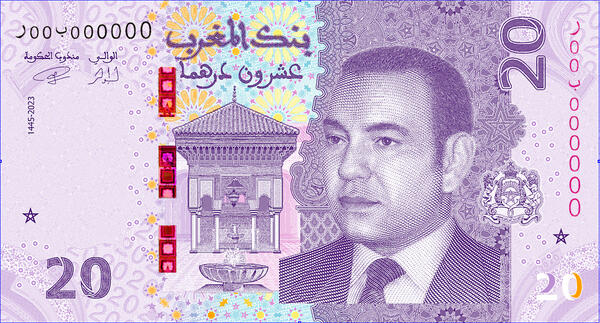
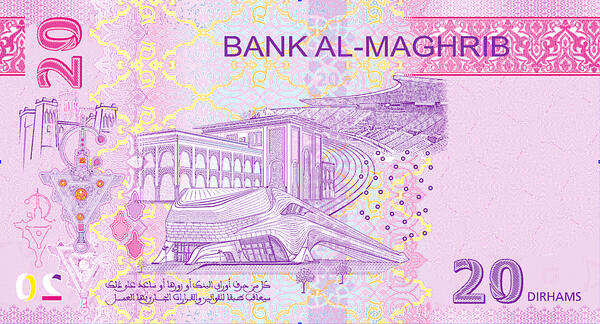
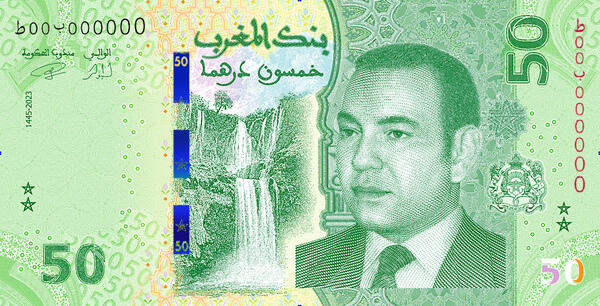
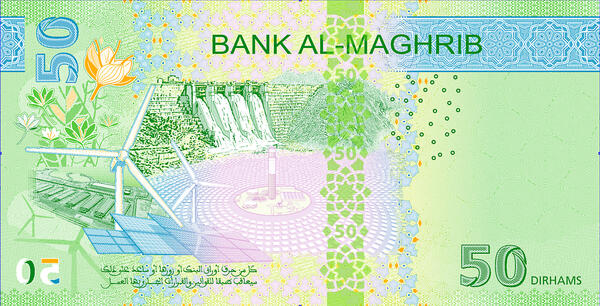
The Origins: From the Sherifian Empire to the Protectorate
The history of the modern Moroccan dirham is rooted in the monetary transformations of pre-colonial Morocco. Before the establishment of the Franco-Spanish protectorate in 1912, Morocco used a complex monetary system inherited from the Almoravid and Almohad dynasties. The main currency was the gold "mithqal", subdivided into silver "dirham", themselves divided into copper "fals". This tripartite system reflected Morocco's gold wealth, fueled by trans-Saharan trade routes.
Under the reigns of the Alaouite sultans, notably Moulay Hassan I (1873-1894), Morocco attempted to modernize its monetary system in the face of growing European pressures. The "douros hassani", silver coins minted according to European standards, testified to this desire for adaptation. However, the progressive infiltration of European currencies - French francs, Spanish pesetas, British pounds - gradually weakened Moroccan monetary autonomy.
The Protectorate Era and the Moroccan Franc
The establishment of the French protectorate in 1912 radically disrupted the Moroccan monetary landscape. The Treaty of Fez, signed between Sultan Moulay Hafid and France, provided for the creation of a bank of issue under French control. The Bank of Morocco, founded in 1907 but reorganized in 1912, became the central monetary institution of the protectorate.
The Moroccan franc, officially introduced in 1921, gradually replaced the old local currencies. Modeled on the French monetary system, it was divided into 100 centimes and maintained at parity with the French franc. This monetary standardization facilitated commercial exchanges with the metropolis but also meant the loss of Morocco's monetary sovereignty.
During the years 1920-1950, the Moroccan franc circulated alongside Spanish currencies in the northern zone of the Spanish protectorate and French francs in the international zone of Tangier. This monetary fragmentation reflected the territorial division imposed by the colonial powers. The banknotes, adorned with orientalist motifs and texts in French and Arabic, embodied this forced cultural duality.
The Renaissance: Birth of the Modern Dirham (1956-1960)
Key dates of monetary independence:
• March 2, 1956: Morocco's independence
• June 30, 1959: Creation of Bank of Morocco
• October 17, 1959: Official creation of the dirham
• April 26, 1960: Effective circulation
Morocco's independence, proclaimed on March 2, 1956, opened a crucial period of monetary transition. Mohammed V, eager to assert regained sovereignty, quickly initiated the creation of an authentic national currency. This approach was part of a broader movement of monetary decolonization affecting the entire Arab-African world.
Negotiations with France for the creation of the new currency lasted four years. Moroccan authorities wanted to completely break with the colonial legacy, while France tried to maintain privileged economic ties. The compromise resulted in the creation of the dirham on October 17, 1959, with effective circulation starting April 26, 1960.
The choice of the term "dirham" held major symbolic significance. By recovering this historical name, Morocco reconnected with its glorious monetary past and affirmed its belonging to Arab-Islamic civilization. This decision consciously opposed maintaining colonial appellations, unlike other African countries that kept "franc" in their monetary nomenclature.
A closer look at the banknotes
The Institutional Architecture of the New Currency
The Bank of Morocco, created by the dahir of June 30, 1959, replaced the Bank of Morocco in its issuing functions. Renamed "Bank Al-Maghrib" in 1987, this central institution was endowed with expanded attributions: monetary issuance, exchange policy, banking supervision, and financial stability.
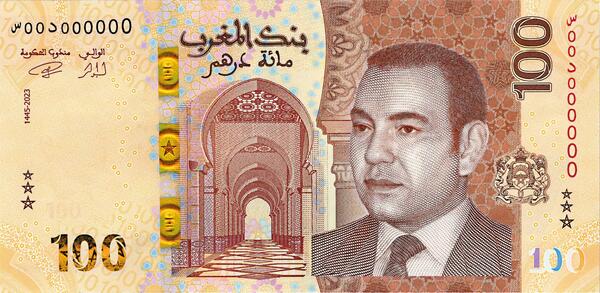
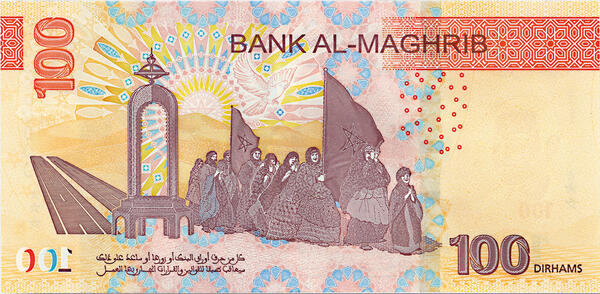
The new dirham was divided into 100 centimes, maintaining the decimal system introduced during the protectorate. The first coins and banknotes, designed by Moroccan artists, featured motifs drawn from the kingdom's architectural and artistic heritage: the Koutoubia, Rabat's ramparts, calligraphed Arabic writing. This monetary aesthetic affirmed the recovered national identity.
Leaving the Franc Zone and Autonomization (1973-1990)
The historic decision to leave the franc zone, made in 1973 under Hassan II, marked a decisive step toward complete monetary autonomy. This break, negotiated with France, allowed Morocco to adopt a more flexible exchange policy adapted to its economic specificities.
The dirham was then pegged to a basket of currencies weighted according to the importance of Morocco's trading partners. This technical innovation smoothed excessive fluctuations while better reflecting the reality of Moroccan economic exchanges. The US dollar, Deutsche mark, British pound, and Japanese yen completed this basket alongside the French franc.
The 1980s brought new challenges with the debt crisis that hit many developing countries. Morocco, faced with chronic budget deficits and growing external debt, had to resort to International Monetary Fund structural adjustment programs. These policies imposed a controlled devaluation of the dirham in 1981, then profound structural reforms.
The Contemporary Era: Flexibility and Perspectives (2010-2024)
2018 Exchange Reform:
• Move to a more flexible exchange regime
• Fluctuation margin: ±2.5% then ±5%
• Preparation for full convertibility
The last decade has been marked by the acceleration of monetary and financial reforms. The 2018 reform, introducing a more flexible exchange regime, constitutes the major innovation of this period. The transition from a fixed peg to controlled flexibility (±2.5% then ±5% around central parity) prepared for the full convertibility of the dirham.
This reform was part of a broader strategy of economic modernization carried by Mohammed VI: Vision 2020, then Vision 2030, industrial emergence plans, renewable energy development. The Moroccan financial sector, now present in fifteen African countries, required a more flexible currency to support its internationalization.
The COVID-19 crisis tested the resilience of the Moroccan monetary system. Bank Al-Maghrib deployed exceptional measures: lowering key rates, massive liquidity injections, refinancing facilities for banks. The dirham relatively well withstood international turbulence, testifying to the solidity acquired over the decades.
Today, the Moroccan dirham embodies the affirmation of fully assumed monetary sovereignty while adapting to the requirements of financial globalization. This synthesis between historical heritage and technical modernity illustrates the singular trajectory of the Sherifian kingdom in the concert of nations.