From federation to monetary stability
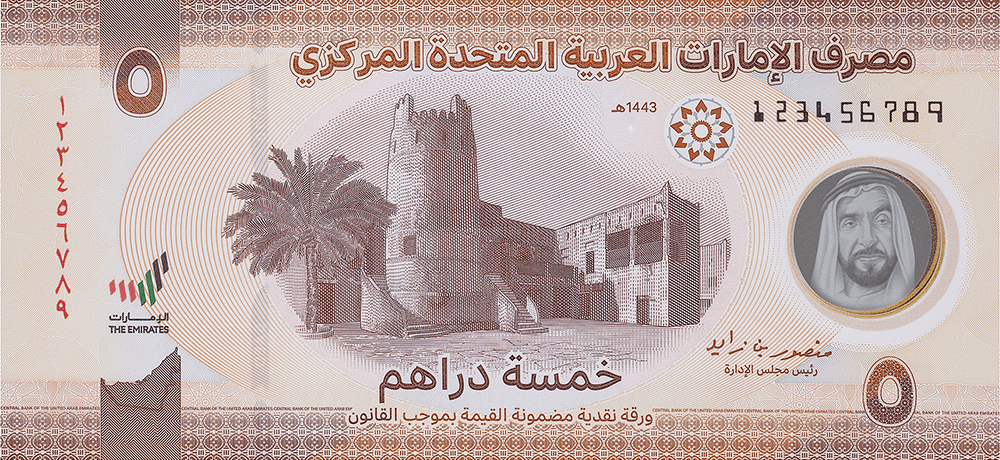
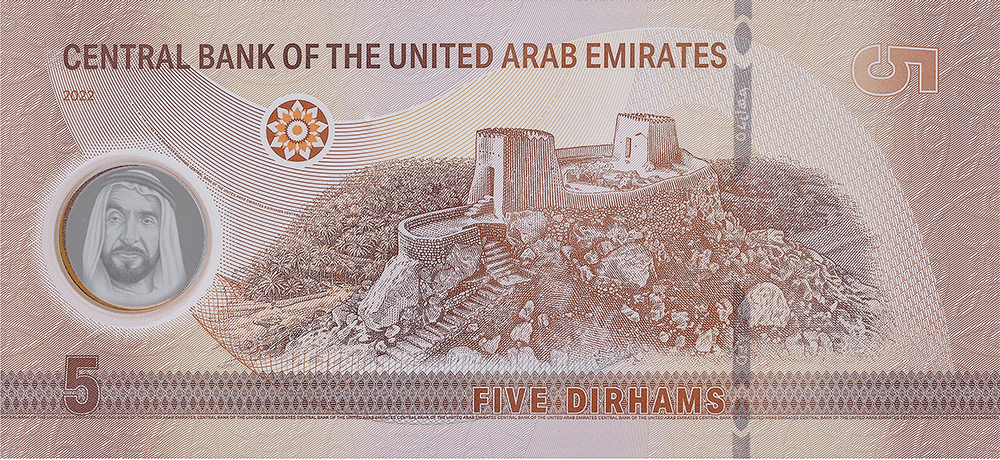
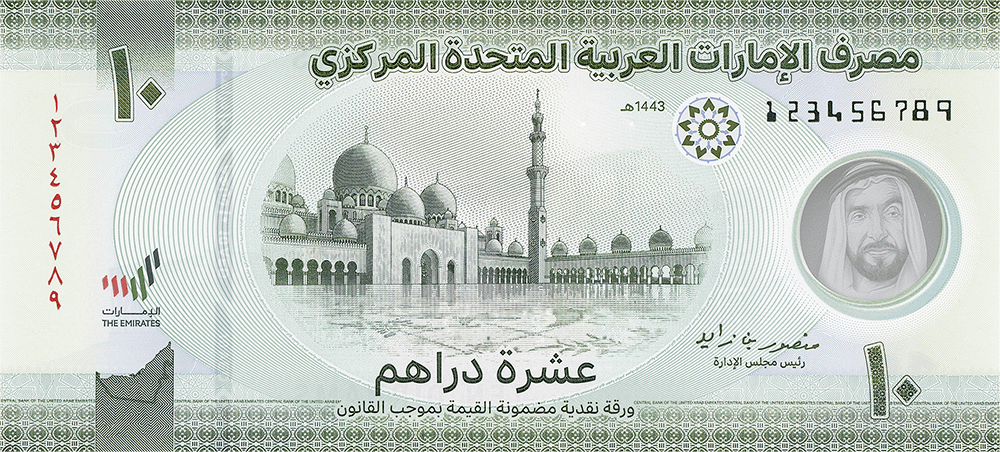
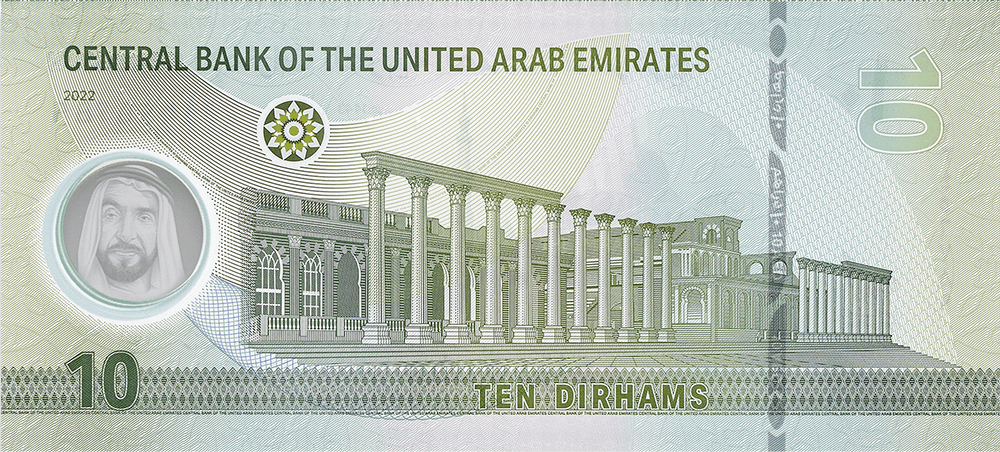
The banknotes in pictures
The Pre-Federal Monetary Mosaic
Before the creation of the United Arab Emirates in 1971, the Persian Gulf region presented a monetary landscape of remarkable complexity. The seven emirates that would later form the federation used a variety of currencies reflecting their diverse commercial ties and particular history.
Indian rupee, oil discovery 1958
Commercial center, Indian rupee dominant
Mix of regional currencies
Ajman, Umm al-Qaiwain, Ras al-Khaimah, Fujairah
The British Indian rupee largely dominated exchanges, a legacy of British commercial influence in the Indian Ocean. Since the 19th century, the British East India Company had established trading posts along the coast, gradually introducing its currency. Local merchants, notably the Al Maktoum family of Dubai and Al Nahyan family of Abu Dhabi, used this rupee for their transactions with India, the main trading partner of the time.
Alongside circulated the Maria Theresa silver thaler, the reference currency of Arab trade since the 18th century, as well as various Ottoman and Persian coins. This monetary diversity testified to the strategic position of the region, a crossroads between India, Persia, the Ottoman Empire, and Arabia.
Oil Emergence and Monetary Transformations
Black gold transforms everything:
• 1958: Oil discovery in Abu Dhabi
• 1959: Creation of the Gulf rupee
• 1966: Problems with Indian devaluation
The discovery of oil in Abu Dhabi in 1958, then in other emirates, radically transformed the regional economy. Growing oil revenues required modernization of the monetary system, inadequate for the new financial volumes. In 1959, the British government created the Gulf rupee specifically for the region, replacing the Indian rupee which had become problematic after the 1966 devaluation.
This Gulf rupee, issued by the Currency Board established in London, circulated in all the Trucial States (current UAE), Bahrain, Qatar, and partially in Oman. Divided into 100 naye paise, it maintained parity with the pound sterling, reflecting British tutelage over the region. The banknotes, printed by Thomas de la Rue in London, bore neutral motifs avoiding any specific national reference.
However, this transitional solution did not fully satisfy any of the concerned states. Abu Dhabi, enriched by oil, aspired to a currency reflecting its new status. Dubai, a traditional commercial center, wanted a currency facilitating its diversified international exchanges.
The Birth of the Federation and the Dirham (1971-1973)
Union timeline:
• December 2, 1971: Independence of 6 emirates
• February 1972: Ras al-Khaimah joins federation
• May 19, 1973: Launch of UAE dirham
On December 2, 1971, six emirates proclaimed their independence and formed the United Arab Emirates, with Ras al-Khaimah joining the federation in February 1972. This political union imperatively required a monetary union to consolidate the emerging national unity.
Monetary negotiations revealed tensions between emirates. Abu Dhabi, the main contributor to the federal budget thanks to oil, claimed a preponderant role in monetary policy. Dubai, strong in its commercial and banking expertise, demanded a currency facilitating its international trading activities. The smaller emirates feared domination by their powerful neighbors.
The adopted compromise established the dirham as federal currency on May 19, 1973, managed by the UAE Central Bank created simultaneously. The choice of the term "dirham" was part of Arab-Islamic historical continuity, affirming the cultural identity of the young federation. This name also created a symbolic link with the Moroccan dirham, the only other contemporary Arab currency bearing this name.
A closer look at the banknotes
The Architecture of the Federal Monetary System
The UAE Central Bank, established in Abu Dhabi, received extensive prerogatives: monetary issuance, exchange policy, banking supervision, federal reserve management. Its board of directors, representing the seven emirates, reflected the federal spirit while granting influence proportional to budgetary contributions.
The new dirham was divided into 100 fils, a traditional Arabic term for monetary subdivisions. The initial parity, set at 4.76 dirhams to one pound sterling, preserved exchange stability with the old system while preparing for anchoring to the US dollar, the rising currency of oil trade.
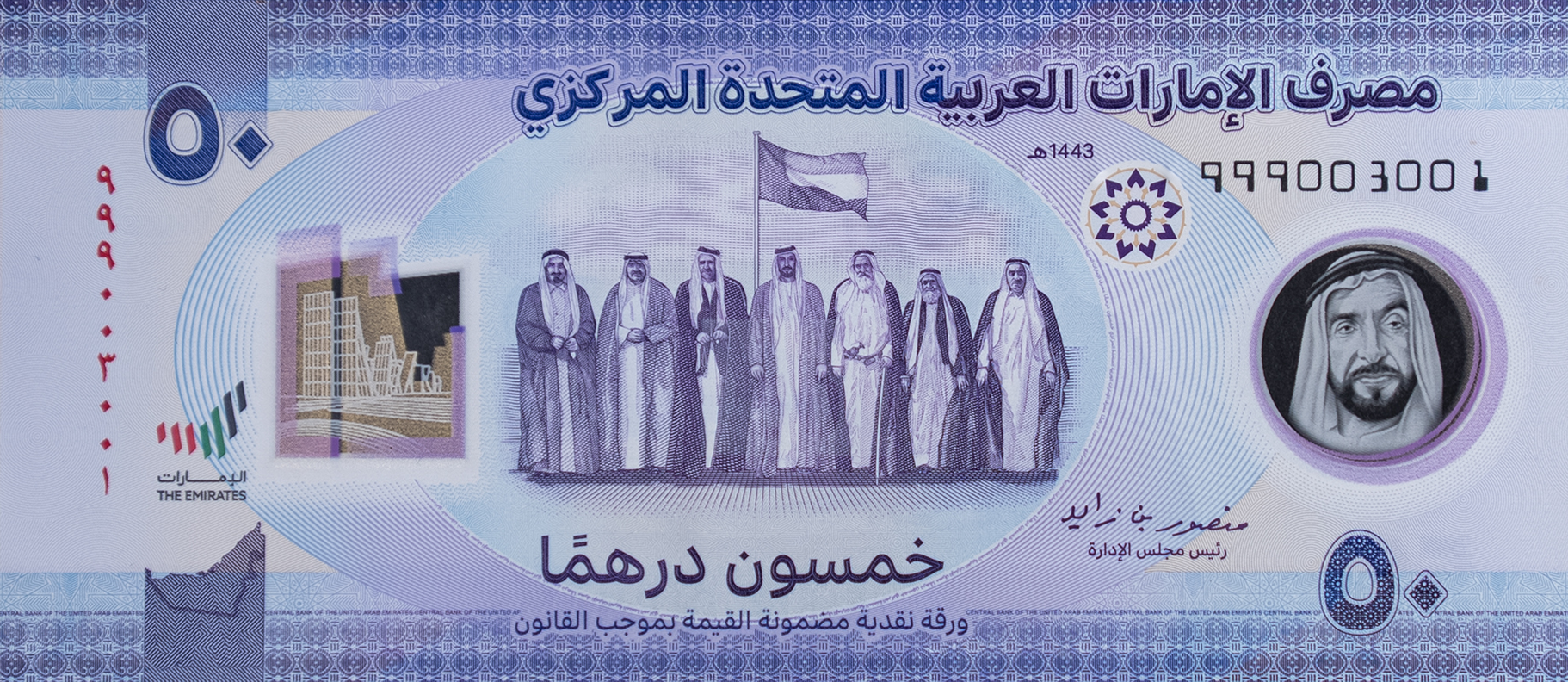
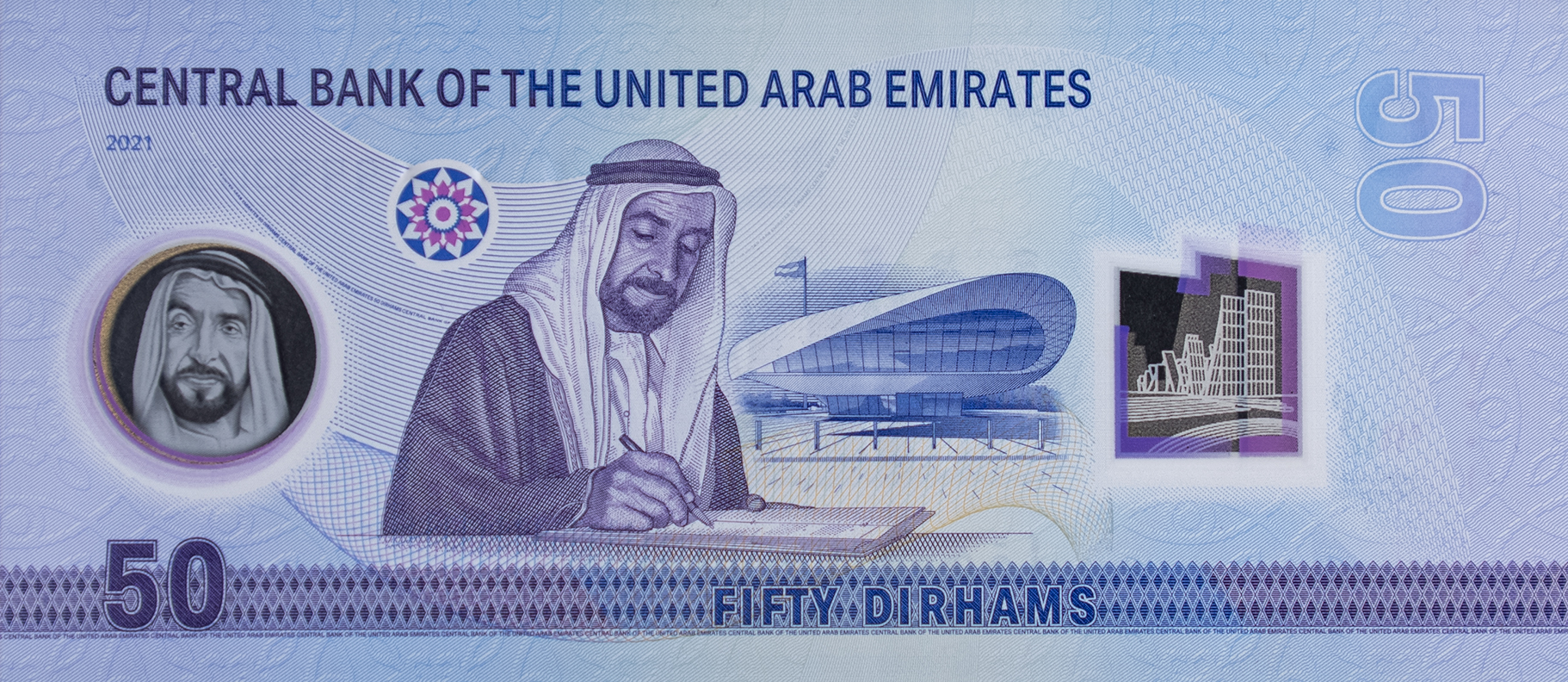
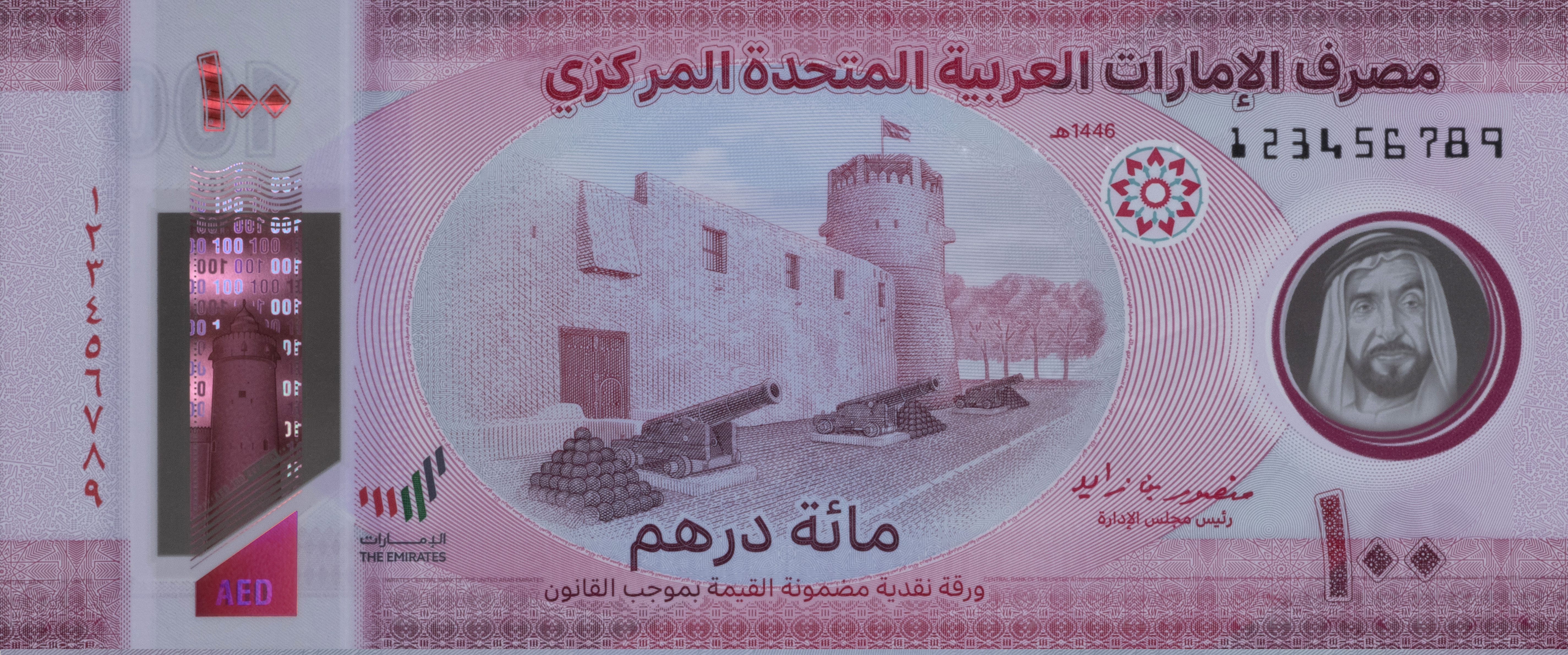
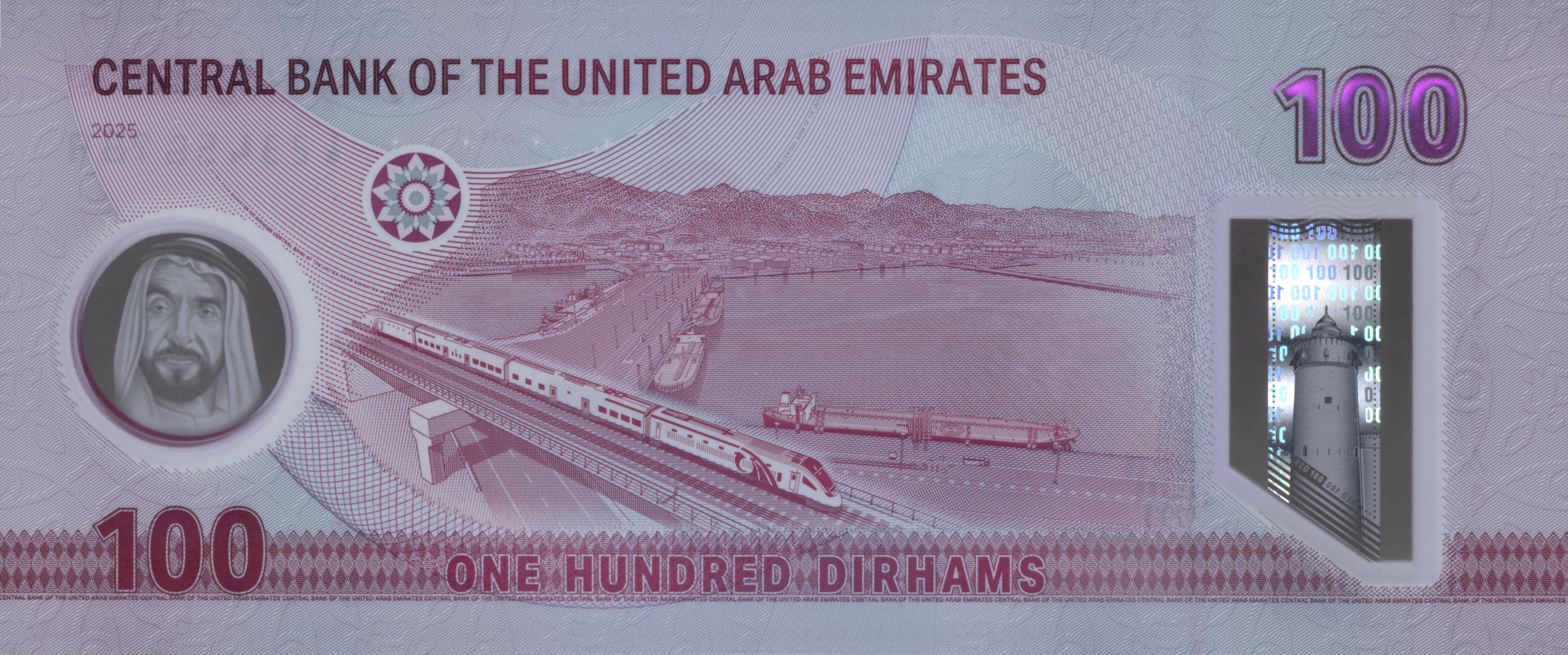
The first monetary issues revealed the concern for federal balance. The banknotes presented monuments and landscapes from all emirates: Abu Dhabi's Grand Mosque, Dubai's souk, Ras al-Khaimah's mountains, Fujairah's beaches. This iconography celebrated diversity in unity, the founding principle of the federation.
Dollar Peg and Monetary Stability
The historic dollar peg:
• 1980: Definitive anchoring to US dollar
• Fixed rate: 3.6725 AED = 1 USD
• One of the world's most durable pegs
In 1980, faced with sterling instability and the growing dollarization of oil trade, the UAE definitively anchored the dirham to the US dollar at the rate of 3.6725 dirhams to one dollar. This fixed parity, maintained since then, constitutes one of the world's most durable currency pegs.
This monetary stability facilitated the emergence of Dubai as a regional financial hub. International banks established themselves massively in the 1980s-1990s, attracted by the dirham's stability and the liberality of the Emirati financial system. The Dubai International Financial Centre, created in 2004, consolidated this position with its own regulatory framework inspired by Anglo-Saxon standards.
Simultaneously, Abu Dhabi developed an economic diversification strategy supported by monetary stability. Sovereign wealth funds - Abu Dhabi Investment Authority, Mubadala, ADIC - invested massively abroad, transforming oil revenues into durable financial assets. This policy required a stable and convertible currency.
Contemporary Challenges and Evolution Perspectives
The 2008 financial crisis tested the resilience of the Emirati monetary system. Dubai's real estate collapse and Dubai World's difficulties revealed vulnerabilities in the federal economy. However, the dollar peg and Abu Dhabi's considerable reserves allowed overcoming the crisis without devaluation.
Modern monetary innovations:
• Central Bank Digital Currency (CBDC) experimentation
• Diversification toward technology and tourism
• Questioning of exchange flexibility
Today, the UAE faces new monetary challenges. Economic diversification toward technology, tourism, and services questions the relevance of the dollar peg. Some economists advocate greater exchange flexibility to improve non-oil competitiveness.
The digital revolution also poses unprecedented questions. The UAE is experimenting with a central bank digital currency (CBDC), potentially revolutionary for cross-border payments. This innovation could strengthen the dirham's international role while preserving the stability that made its success.
The Emirati dirham, fifty years after its creation, embodies the success of a federal monetary integration unique in the Arab world. This stable currency accompanied the spectacular transformation of a Bedouin region into a globalized economy, testifying to the relevance of the founding choices of 1973.